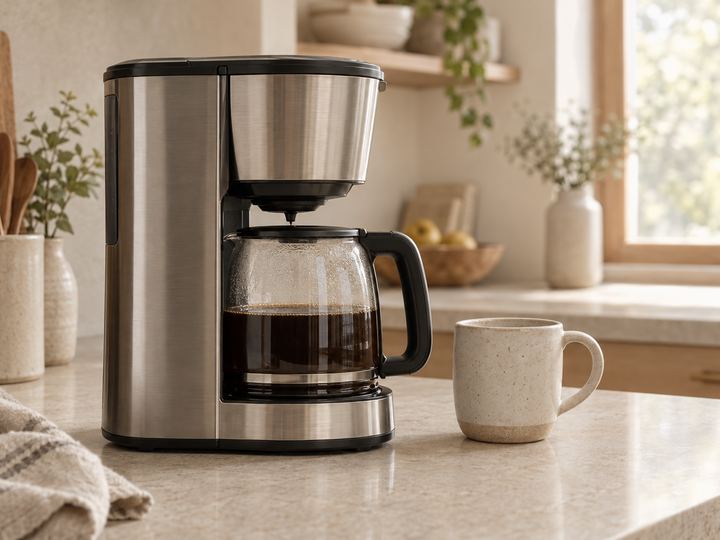
“Non-toxic coffee maker” sounds reassuring, but it is not a precise product specification. Some sellers use the phrase for BPA-free plastic; others mean a glass brewer or stainless-steel construction. Those are different things, and none automatically demonstrates that one machine is healthier than another.
A better buying method is to focus on documented food-contact materials, product condition and how you actually brew coffee.
Materials worth understanding
Glass: Borosilicate glass is popular in manual brewers such as the Chemex. It is easy to inspect and does not require a hidden plastic filter basket. Glass can break, and it still needs appropriate handling when hot.
Ceramic and porcelain: These are common in pour-over drippers. Choose reputable manufacturers that specify food-safe glazing and appropriate temperature use.
Stainless steel: Steel is widely used in kettles, French presses and stovetop brewers. Watch for coatings, seals and internal plastic parts, and confirm that components are intended for food contact.
Plastic and silicone: There are many formulations. A statement such as “BPA-free” addresses one substance; it does not tell you whether plastic is present or characterize all possible exposures.
Three accessible brewing choices
For a clear, paper-filtered cup, the Chemex glass pour-over brewer has a straightforward brewing path. For a single morning cup, a ceramic V60 dripper gives you control without an electric machine. For a rich brew, consider a stainless-steel French press after checking its filter assembly.
Each serves a different taste and convenience preference. None should be promoted as proven to prevent a medical condition.
Questions to ask brands
Ask which materials contact hot water and brewed coffee; whether coatings or liners are used; which standards the product is designed to meet; and whether parts can be replaced. Ask for the answer for the exact model, not just the brand.
You should also consider brewing hygiene. A coffee maker that is difficult to clean or has damaged components is a poor choice regardless of its outer material. Clean according to manufacturer directions, avoid abrasive methods that damage finishes and replace worn seals when needed.
Is paper filtering a plus?
Paper filters trap more coffee oils and fine particles than many metal filters. This can change the flavor and texture substantially. For shoppers primarily focused on materials, paper can also eliminate the need for some reusable filter assemblies, but it introduces an ongoing consumable.
Bottom line: Treat “non-toxic” as a prompt to investigate, not a certification. Favor transparent component information, a brewing method you enjoy and materials that match your preferences.