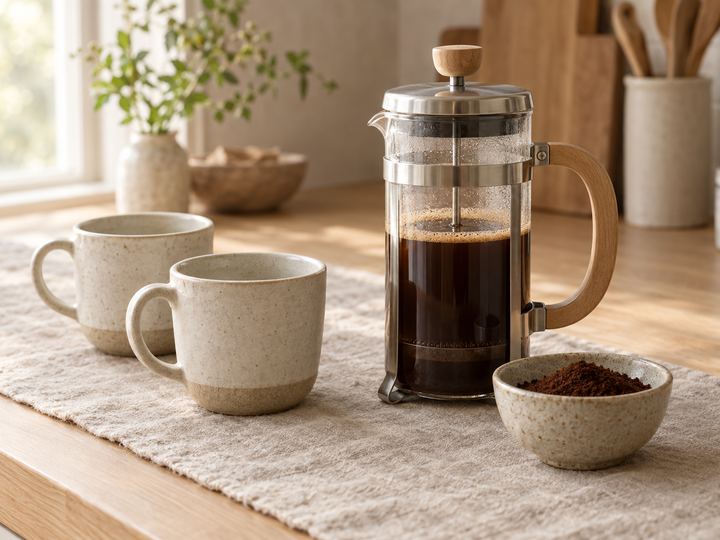
A French press is a natural starting point for low-plastic brewing. There is no pump or disposable pod. You add coffee, pour in hot water, steep and press. Yet not every French press is actually plastic-free: handles, lids, filter supports and seals may contain polymers.
Best direction for durability: Stainless-steel press
A double-wall stainless-steel French press is ideal for anyone who has broken a glass carafe or likes to take a brewer camping. Frieling-style presses are worth examining because the brewing vessel and filter assembly emphasize metal construction. Still, confirm the exact model’s lid and plunger components with the seller or manufacturer.
If durable everyday brewing is the goal, compare stainless-steel French press models.
Best direction for visibility: Glass press with a metal filter
A glass carafe lets you see the brew and makes cleaning straightforward. The challenge is usually the lid and plunger, which may combine plastic, metal and silicone depending on the product. A glass body alone does not guarantee zero plastic contact.
For buyers who love the traditional look, explore glass French presses with metal plungers, and inspect replacement-parts diagrams before buying.
What about ESPRO P7?
The ESPRO P7 is a premium insulated stainless-steel press with an unusually fine dual-filter system. It can make a cleaner cup than a traditional coarse-mesh French press. However, ESPRO states that its microfilter includes a polypropylene cage and silicone seal. That makes it an option for someone who prioritizes performance and a metal vessel, not someone seeking strict plastic-free contact.
If that compromise is acceptable, see the ESPRO P7 French press.
How to verify a press
Check the inside of the lid, the plunger shaft, mesh screen, filter frame, gasket and any plastic nut or retaining ring. Ask whether replacement filters use different materials from the original. Product pages often show the outside and omit the most relevant details.
How to brew a better cup
Start with coarsely ground fresh beans and approximately 1 gram of coffee for every 15 to 17 grams of water. Add hot water, stir gently, steep around four minutes and lower the plunger without forcing it. If the result tastes harsh, adjust your grind or steeping time. Pour the finished coffee out rather than leaving it on the grounds indefinitely.
French press coffee retains more oils and fine particles than paper-filtered coffee. If you prefer a lighter, cleaner result, a ceramic or glass pour-over may suit you better.
Bottom line: Pick a stainless-steel French press for durability or a glass one for visibility, but check the filter assembly before using the phrase “plastic-free.”