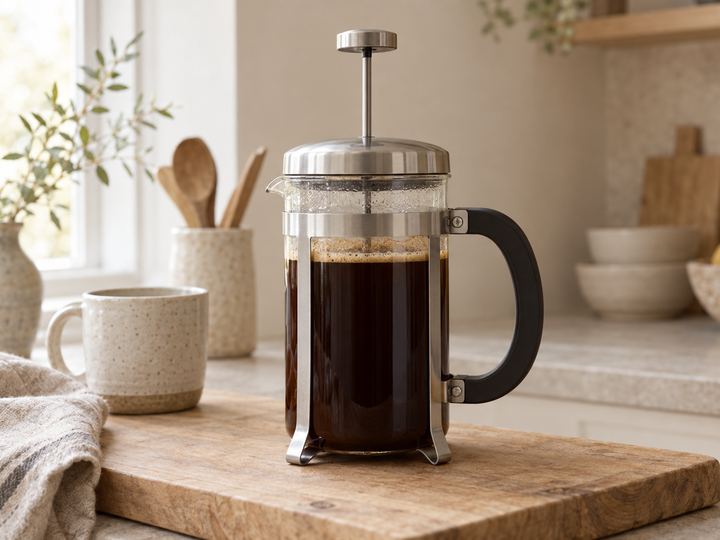
The Chemex and French press are both manual brewers, but they make noticeably different coffee. They also have different material considerations. If you want to minimize plastic contact, the choice is not simply “glass versus metal.” It depends on the precise model and its filter components.
The short answer
A traditional Chemex has a borosilicate-glass brewing body and uses a paper filter. That makes the surfaces touching hot water and coffee straightforward to inspect. A French press may have a glass or stainless-steel vessel, but its lid and plunger assembly can include plastic or silicone depending on the design.
A carefully selected metal French press can still be a very low-plastic choice. Neither brewing method should be judged solely by its appearance.
| Feature | Chemex | French press |
|---|---|---|
| Brewing method | Paper-filtered pour-over | Immersion and metal filtration |
| Typical cup | Clear, lighter texture | Fuller body, more oils and sediment |
| Filters | Recurring paper filters | Usually reusable mesh |
| Materials to inspect | Kettle, glass brewer, filter | Vessel, lid, plunger, screen and seals |
| Technique | Controlled pouring helps | Steep time and grind matter most |
| Cleanup | Lift out paper filter | Remove grounds and wash mesh |
When Chemex makes more sense
Choose Chemex if you want a clean cup with little sediment, enjoy the pour-over process and like one glass vessel for brewing and serving. Its main recurring cost is paper filters. It can also be fragile, and brewing multiple cups takes active attention.
For this style of coffee, look at Chemex glass brewers.
When a French press makes more sense
Choose French press if you want richer texture, prefer a reusable filter and do not enjoy pouring in stages. It can be particularly convenient for darker roasts or for people who like coffee with a heavier mouthfeel.
The filter assembly is the deciding factor for material-conscious shoppers, so compare stainless-steel French presses with close attention to their parts.
Is one healthier?
It is not appropriate to claim a blanket winner from the materials alone. Paper and metal filters affect the amount of coffee oils and fine particles in the cup, but individual health considerations depend on factors beyond the brewer. If you have a medical reason to restrict unfiltered coffee, discuss that with a qualified clinician rather than relying on a product comparison.
Our recommendation
For the clearest, easiest-to-audit hot-water path, the Chemex has an advantage. For durability and stronger mouthfeel, a verified low-plastic stainless-steel French press is appealing. Your preferred taste should remain part of the decision.
Bottom line: Chemex usually provides greater visibility into the brewing path; French press provides fuller-bodied coffee and a reusable filter. Check the exact products, not just the categories.