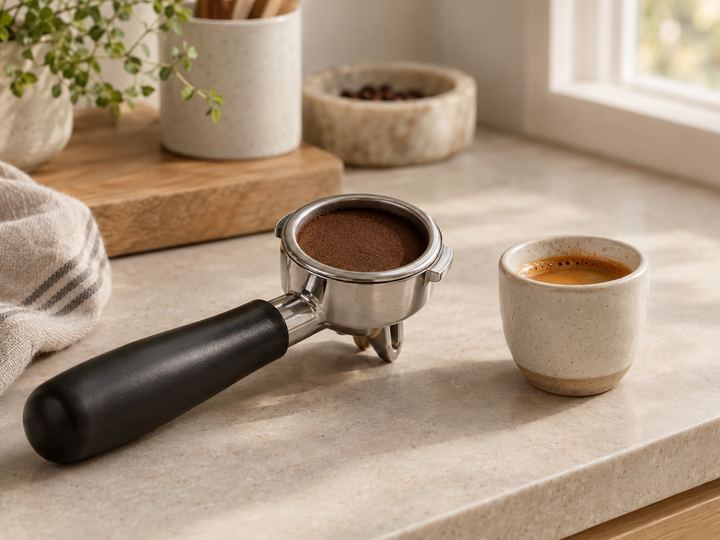
Breville makes espresso machines with sleek stainless-steel styling, but an exterior finish is not evidence of an all-metal water path. Electric espresso machines generally combine reservoirs, pumps, tubing, valves, heating systems and seals. The actual materials can vary by model and revision.
So are Breville espresso machines plastic-free? Do not assume they are. A product may contain plastic or other polymers even when its front panel and portafilter are metal. The exact BPA-related claims also need to be verified against model-specific manufacturer documentation.
Why the water path matters
Cold water typically starts in a reservoir, moves through internal plumbing and passes a heating system before reaching the coffee puck. Materials downstream of heating are especially relevant to buyers trying to limit plastic contact with hot water.
Some parts are hidden behind panels, and sellers rarely provide a complete material list on a retail page. That makes certainty difficult without technical documents or a written answer from customer support.
Questions to ask before purchase
Ask Breville or the authorized seller to identify the water reservoir material, heated-water tubing, shower screen, group-head components, seals and any coatings. Request information for the specific model number and market version. Also ask whether replacement parts differ from the factory-installed components.
If you are comparing machines for convenience and features, browse Breville espresso machine models while collecting those answers. Do not infer internal construction from product photography.
What if you want less plastic?
A manual lever machine may offer a shorter, easier-to-document path, though gaskets and seals still require attention. If you mainly want concentrated stovetop coffee rather than true espresso, a stainless-steel moka pot is another route. Neither alternative should be marketed as entirely plastic-free without component verification.
For a hands-on option, explore manual espresso makers. For a simpler strong-coffee setup, consider stainless-steel moka pots.
Is BPA-free enough?
That is a personal purchasing criterion, not a synonym for no plastic. BPA is one chemical; a BPA-free statement may be useful product information but does not specify every polymer, seal or contact condition in the machine.
Bottom line: Treat the stainless-steel appearance of a Breville machine as design information, not a material audit. If plastic contact is a deciding factor, ask for model-specific water-path details before buying.