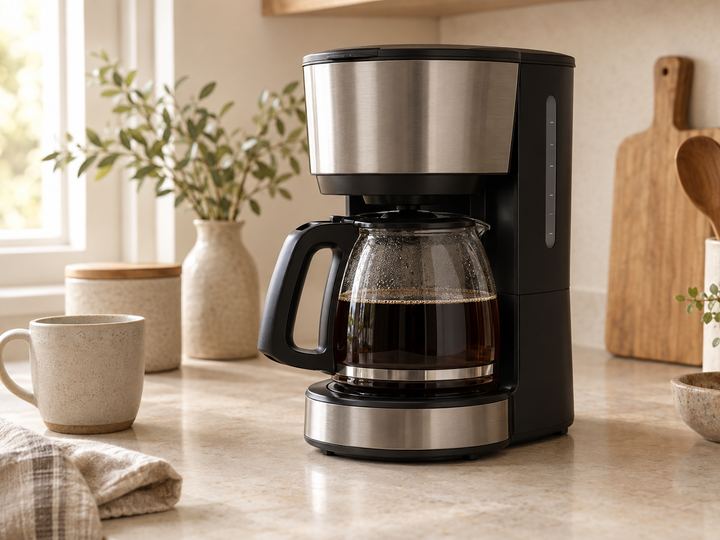
Most modern coffee makers contain plastic. Sometimes it's obvious, like a plastic water reservoir or brew basket. Other times, it's hidden inside the machine, where tubing, valves and other components move water through the brewing system.
If you're trying to reduce plastic in your coffee routine, that can make shopping surprisingly frustrating.
A machine might advertise a stainless steel exterior while still using plastic components in its water path. And just because a coffee maker says BPA-free doesn't necessarily mean that hot water never comes into contact with plastic.
The good news? There are plenty of excellent coffee brewing methods that rely primarily on stainless steel, glass or ceramic.
In this guide, we're looking at 10 coffee makers worth considering if your priority is reducing plastic contact with hot water and freshly brewed coffee.
Some are designed without plastic in the brewing path. Others are low-plastic alternatives with limitations worth understanding before you buy.
Disclosure: This post contains affiliate links. We may receive a commission from qualifying purchases at no additional cost to you.
Our Top 10 Coffee Makers at a Glance
| Coffee maker | Brewing style | Main appeal |
|---|---|---|
| Frieling French Press | Immersion | Traditional all-steel press |
| Aarke Coffee Press | Immersion | Premium insulated design |
| Ziruma French Press | Immersion | Detailed stainless steel specifications |
| COLETTI Bozeman | Stovetop percolator | No plastic or aluminum in brew path |
| Chemex 8-Cup Classic | Pour-over | Glass brewing vessel |
| Hario V60 Ceramic 02 | Pour-over | Ceramic dripper with precise control |
| Presto 02811 | Electric percolator | Convenient automatic brewing |
| Presto 02815 | Electric percolator | Cordless serving |
| Presto 02822 | Electric percolator | Smaller batch size |
| ESPRO P7 | French press | Fine filtration and less sediment |
1. Frieling Stainless Steel French Press: Our Favorite Traditional Option
For a coffee maker that combines straightforward brewing with a manufacturer-described plastic-free design, the Frieling French Press is difficult to overlook.
It's made with 18/10 stainless steel and uses an insulated double-wall body. Unlike many ordinary coffee presses, the manufacturer states that there is no plastic anywhere in its construction.
That makes it a particularly straightforward choice for someone who wants to avoid plastic in contact with hot coffee.
The Frieling also eliminates the need for disposable pods and paper filters. Its reusable stainless steel filter separates the grounds from the coffee, while the insulated vessel helps reduce heat loss.
It's an especially attractive option for people who like a heavier, more full-bodied cup.
Pros
- Stainless steel throughout, according to the manufacturer.
- Insulated double-wall construction.
- Several capacity options.
- Reusable filtration system.
Cons
- Requires manual preparation.
- French press coffee naturally contains more oils and fine sediment than paper-filtered coffee.
- More expensive than many entry-level glass presses.
Who should buy it? Anyone looking for a versatile, durable, plastic-free French press for everyday use.
See the Frieling stainless steel French press.
2. Aarke Coffee Press: For Premium Design and Heat Retention
The Aarke Coffee Press is ideal for anyone who likes beautiful kitchenware but doesn't want appearance to come at the expense of material quality.
The manufacturer specifies stainless steel for every major component, including the body, filter and plunger.
Its vacuum-insulated design is a particularly attractive feature for people who enjoy slowly drinking their morning coffee instead of pouring it immediately after brewing.
The reusable metal mesh filter also avoids the need for disposable paper filters.
Aarke's press holds approximately one liter, making it practical for a couple or a small household.
Pros
- Manufacturer-confirmed all-stainless-steel construction.
- Attractive, minimalist appearance.
- Vacuum-insulated body.
- Dishwasher-safe components.
Cons
- Higher upfront cost.
- Manual brewing.
- Insulation doesn't prevent coffee from continuing to extract while it sits on the grounds.
Who should buy it? Coffee lovers who prioritize design, construction quality and insulation.
Explore the Aarke stainless steel coffee press.
3. Ziruma Stainless Steel French Press: For Buyers Focused on Materials
Ziruma takes a particularly detailed approach to its stainless steel specifications.
The company describes its French press as using 316 stainless steel for coffee-contact areas and 304 stainless steel in its double-wall body.
The press also features a multi-layer reusable steel filtration system and a 34-ounce capacity.
For buyers who spend time researching materials before purchasing kitchen appliances, these details help make the product easier to evaluate.
Like other immersion brewers, the Ziruma produces full-bodied coffee without needing an electrical outlet.
Pros
- Manufacturer states it is plastic-free.
- Specific stainless steel grades are disclosed.
- Insulated construction.
- Useful 34-ounce capacity.
Cons
- Only suitable for manual brewing.
- Filter assembly needs regular cleaning.
- Less convenient than an electric machine when making coffee in a hurry.
Who should buy it? Shoppers who value detailed material specifications and prefer stainless steel over glass.
Take a closer look at the Ziruma French press.
4. COLETTI Bozeman 9-Cup: For Classic Stovetop Brewing
The COLETTI Bozeman is a refreshing alternative to complicated countertop machines.
Rather than using a heating element inside an electrical appliance, the Bozeman uses your stove or another suitable heat source.
Water heats in the lower chamber, rises through a vertical tube and repeatedly passes over coffee grounds in a stainless steel basket.
The result is traditional percolator coffee, which tends to have a strong, rich flavor.
COLETTI markets the Bozeman as a brewing system without aluminum or plastic in the coffee path. That is especially relevant to people trying to avoid plastic exposure during brewing.
The Bozeman is also popular as a general style of coffee maker for camping and outdoor use because it requires no electricity.
Pros
- No plastic or aluminum in the brew path, according to COLETTI.
- Durable stainless steel construction.
- No disposable pods.
- Useful for home and outdoor brewing.
Cons
- Requires a separate heat source.
- Coffee can become bitter if percolated too long.
- Stovetop compatibility varies between Bozeman versions; confirm whether your model supports induction.
Who should buy it? People who prefer a traditional metal coffee pot and don't mind monitoring the brew.
Explore the COLETTI Bozeman 9-cup coffee percolator.
5. Chemex 8-Cup Classic: For Clean, Smooth Pour-Over Coffee
The Chemex is one of the most recognizable manual coffee makers in the world.
Its hourglass-shaped glass vessel combines brewing and serving in a single piece of equipment.
Unlike an electric coffee machine with internal tubing and a plastic water tank, the Chemex has a simple brewing path. Hot water is poured over coffee grounds held in a paper filter, and the finished coffee flows directly into the glass carafe.
The classic model also features a wooden collar and leather tie around the neck, which function as an insulated grip rather than a component of the coffee-contact interior.
Chemex filters are relatively thick, helping remove oils and fine coffee particles. This typically produces a noticeably cleaner cup than traditional French press brewing.
For people who prioritize plastic-free coffee contact and enjoy lighter, more delicate coffee, the Chemex is an excellent candidate.
Pros
- Glass brewing vessel.
- No plastic components required in the brewing path.
- Excellent for clean, paper-filtered coffee.
- Attractive design doubles as a serving carafe.
Cons
- Glass is breakable.
- Requires special filters for the intended brewing experience.
- More hands-on than an electric coffee maker.
Who should buy it? Pour-over enthusiasts and anyone seeking a simple glass coffee maker without internal plastic tubing.
Discover the Chemex 8-Cup Classic glass coffee maker.
6. Hario V60 Ceramic 02: For Coffee Lovers Who Want More Control
The Hario V60 Ceramic 02 is another excellent alternative to plastic-heavy brewing systems.
Made from ceramic, the V60 is a cone-shaped dripper designed to sit over a mug or carafe.
Its spiral ridges and large bottom opening allow water to pass through the grounds in a way that responds noticeably to your pouring technique, grind size and filter choice.
That flexibility is one reason the V60 is popular among specialty coffee enthusiasts.
The ceramic version avoids using a plastic dripper in direct contact with hot water.
Pair it with a glass or stainless steel carafe and a suitable kettle, and you have a straightforward low-plastic brewing setup.
Pros
- Ceramic brewing surface.
- No electricity needed.
- Great control over extraction.
- Suitable for brewing one to several small cups.
Cons
- Requires separate filters and a mug or carafe.
- Pouring technique affects consistency.
- Ceramic can chip or break if dropped.
Who should buy it? People who enjoy experimenting with coffee recipes and prefer a ceramic dripper over a plastic one.
Check out the Hario V60 Ceramic 02 pour-over dripper.
7. Presto 02811 Stainless Steel Percolator: For Convenient Electric Brewing
Not everyone wants to stand over a kettle every morning.
If you prefer automatic brewing, the Presto 02811 offers the convenience of an electric coffee maker with a substantial amount of stainless steel in its construction.
This 12-cup percolator uses a stainless steel pot, grounds basket and percolator tube.
Presto states that it can brew approximately one percolator cup per minute and automatically maintain the coffee's temperature afterward.
The signal light makes it easy to know when the brew is ready.
However, although the main brewing components are stainless steel, the complete internal material path should be confirmed before treating the machine as entirely plastic-free.
Pros
- Electric brewing convenience.
- Stainless steel brew basket and percolator tube.
- Generous capacity.
- Automatic warming function.
Cons
- Requires electricity.
- Percolator coffee has a stronger flavor than drip coffee.
- Full plastic-free status of the machine is not established.
Who should buy it? Households that want the convenience of an electric coffee maker while reducing reliance on plastic brewing components.
View the Presto 02811 12-cup stainless steel coffee maker.
8. Presto 02815 Cordless: For Easier Serving
The Presto 02815 shares many features with traditional electric percolators but adds an especially convenient improvement: the coffee pot can be lifted off its electrical base for cordless serving.
That means you can bring the pot directly to the breakfast table without dragging a power cord along with it.
The 02815 uses a stainless steel pot, grounds basket and percolator tube, with a glass viewing component in the lid.
Its 12-cup capacity makes it suitable for households that brew multiple cups at once.
The matte-black exterior also gives it a more contemporary appearance than traditional polished-steel percolators.
For people trying to reduce plastic contact, the stainless steel brewing components are promising, but it's important to verify the full assembly before calling the appliance plastic-free.
Pros
- Removable pot for cord-free serving.
- Stainless steel brewing components.
- Glass viewing feature.
- Automatic warming.
Cons
- Typically costs more than simpler electric percolators.
- Requires a power base for brewing.
- Not independently established as 100% plastic-free.
Who should buy it? Families and coffee drinkers who want electric brewing with convenient table service.
See the Presto 02815 cordless stainless steel percolator.
9. Presto 02822 6-Cup: For Small Households
The Presto 02822 offers a smaller alternative to the larger electric percolators on this list.
It can brew approximately two to six percolator cups, making it more practical for one or two coffee drinkers.
Like the larger Presto models, it uses stainless steel for its grounds basket and percolator tube.
It also has an indicator light and an automatic warming function.
One detail worth noting: Presto measures a coffee-maker cup at approximately five fluid ounces, not the eight ounces used in a standard US measuring cup.
That means its six-cup maximum is roughly 30 fluid ounces, not six large mugs.
This is still plenty for many households, but it's worth understanding before you purchase.
Pros
- Convenient smaller capacity.
- Stainless steel brewing components.
- Electric operation.
- More compact than larger 12-cup machines.
Cons
- Not suitable for large groups.
- Smaller capacity than the other electric percolators.
- Complete plastic-free status requires further verification.
Who should buy it? Solo coffee drinkers and couples who want an electric stainless steel percolator without making a huge batch.
Explore the Presto 02822 six-cup electric percolator.
10. ESPRO P7 French Press: For Coffee Without So Much Sediment
The ESPRO P7 is a strong choice for coffee lovers who enjoy French press brewing but want fewer coffee grounds in their cup.
Its dual micro-filter system offers finer filtration than many conventional French presses.
The stainless steel body is insulated, durable and visually appealing.
But there's a trade-off.
Unlike the Frieling or Aarke, the ESPRO P7 is not entirely free from nonmetallic components. Its filtering design includes silicone and may include plastic components.
Therefore, it belongs in this roundup as a low-plastic stainless steel alternative, not as a fully plastic-free recommendation.
If excellent filtration is your top priority, it may still be worth considering.
Pros
- Fine dual-filter system.
- Durable insulated stainless steel body.
- Less sediment than many traditional French presses.
- No electric power required.
Cons
- Not completely plastic-free.
- More complex filter cleaning.
- Higher price than basic presses.
Who should buy it? People who prioritize smooth, low-sediment French press coffee over completely eliminating plastic.
Explore the ESPRO P7 insulated French press.
How to Choose a Coffee Maker With Less Plastic
Check where hot water actually travels
The exterior material is only part of the story.
For the most relevant assessment, inspect the water reservoir, heating chamber, internal tubing, brew basket, filter assembly and finished-coffee container.
A stainless steel outer shell doesn't necessarily mean the internal brewing path is metal.
Choose the right brewing method
French presses make rich, full-bodied coffee with relatively little equipment.
Pour-over brewers such as Chemex and Hario V60 generally produce a cleaner cup and give you more control over brewing variables.
Percolators repeatedly cycle hot water over the grounds and typically create a strong, traditional coffee flavor.
The right choice depends on your preferences as much as on materials.
Think about convenience
Manual brewing systems often make it easier to avoid plastic in the brewing path because they contain fewer components.
However, electric percolators offer important benefits for people who prefer automatic brewing.
It's worth deciding whether you value maximum material simplicity or convenience most.
Don't confuse BPA-free with plastic-free
A BPA-free coffee maker can still contain plastic.
BPA-free means a particular chemical isn't used in the relevant materials as claimed; it does not establish that the product contains no polymers or that every potential chemical exposure has been eliminated.
Similarly, a plastic-free brewer doesn't automatically guarantee better-tasting coffee or improved health outcomes.
Frequently Asked Questions
What type of coffee maker has the least plastic?
Simple glass, ceramic and all-stainless-steel manual brewers are among the easiest options to evaluate because they have fewer internal components.
Are electric coffee makers available without plastic parts?
Some electric percolators use substantial stainless steel construction, but it's important to verify every component of the hot-water and coffee-contact pathway before claiming the machine is entirely plastic-free.
Is a French press better than an electric coffee maker?
It depends on your priorities. A French press is simple, durable and easy to inspect for materials. An electric percolator is often more convenient for daily brewing.
Can I make coffee without plastic and without electricity?
Yes. A glass Chemex, ceramic Hario V60, stainless steel French press or suitable stovetop percolator can brew coffee without relying on an electric coffee machine.
Are plastic-free coffee makers healthier?
Choosing a brewer with no plastic contact can help you meet a personal goal of reducing that contact. However, there isn't sufficient evidence to claim that switching to a specific plastic-free coffee maker will produce a measurable health benefit for everyone.
Final Verdict: Which Coffee Maker Is Right for You?
If your main goal is to eliminate plastic from the brewing path, the Frieling French Press, Aarke Coffee Press, Chemex and Hario V60 Ceramic are especially appealing choices.
The COLETTI Bozeman is another excellent candidate if you prefer stovetop percolator coffee.
For people who prefer electric brewing, the Presto models provide convenient stainless steel-heavy alternatives, although their complete material construction should be confirmed.
And if your priority is a smoother French press cup, the ESPRO P7 offers an interesting filtration system despite not being entirely plastic-free.
Ultimately, the right coffee maker is the one that fits your routine, your taste preferences and your standards for material transparency.