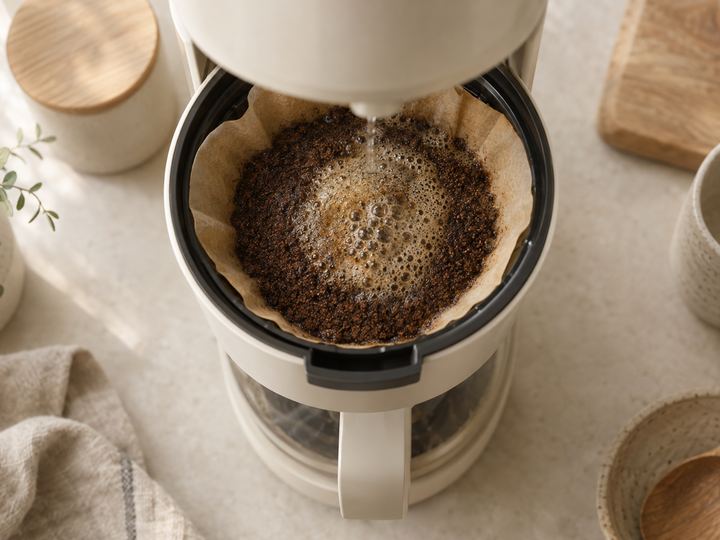
The Technivorm Moccamaster is known for its distinctive design and convenient drip brewing, but is it plastic-free? No. Moccamaster says that its brewers include plastic components intended to contact coffee or water. The company describes these components as food-safe and free from BPA, BPS, BPF and phthalates.
That distinction matters. A machine can be thoughtfully designed and still fail a strict no-plastic-contact requirement. If your main goal is to eliminate plastic from the hot-water path, the Moccamaster is not the obvious choice.
Where is the plastic?
Check the exact model’s water reservoir, brew basket, lid components and any parts along the brewing route. Moccamaster publishes explanations for its material choices, but appearances alone are not enough to map every point of contact. Different models may have different arrangements, so consult documentation for the version you intend to purchase.
A statement that parts are BPA-free addresses particular chemicals; it does not mean the parts are metal or glass. It also should not be treated as a comprehensive health-risk assessment.
Why might someone still choose it?
Convenience is a legitimate priority. An automatic drip machine can make several cups without the attention required for manual pouring. Some buyers value predictable morning brewing, replacement parts and ease of use more than eliminating all polymer contact.
If that sounds like you, compare Moccamaster coffee maker models based on capacity, carafe style, footprint and cleaning requirements rather than assuming they are plastic-free.
What should a strict no-plastic-contact buyer choose instead?
A Chemex with paper filters is easier to inspect because the water passes through a filter into glass. A ceramic dripper over a glass server offers similar transparency. Either requires a separate kettle, and you should check the kettle’s own water-contact materials as part of the system.
For a batch brewer, look at the Chemex Classic. For single cups, consider a ceramic pour-over dripper.
The practical verdict
The Moccamaster can still be worth considering for buyers who accept food-contact plastic in exchange for automatic brewing. But it should not appear on a strictly plastic-free list without a conspicuous explanation of that compromise.
Bottom line: Moccamaster is not plastic-free. Choose it for automation if its documented materials fit your preferences; choose a simpler glass or ceramic manual brewer if avoiding hot-water contact with plastic is non-negotiable.