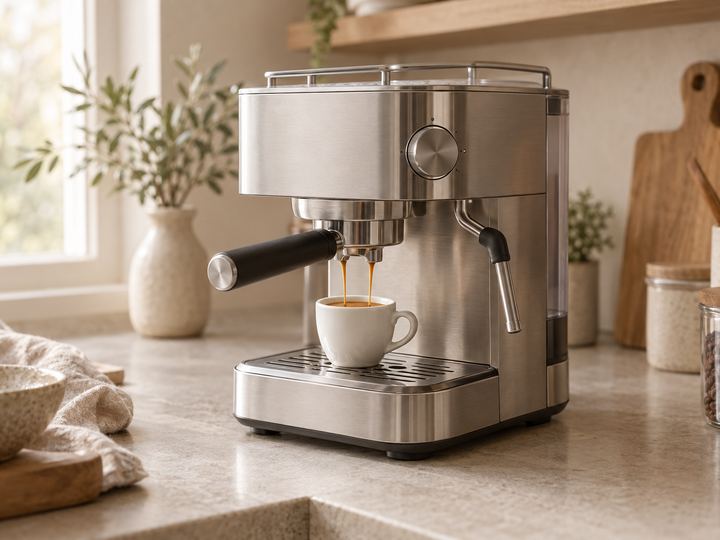
Finding a truly plastic-free espresso machine is more difficult than finding a glass pour-over. Espresso equipment combines heat, pressure, valves, gaskets and water transport. Even machines with attractive stainless-steel bodies may use polymer tubing or seals internally.
The first question is whether you need real espresso under pressure or simply a strong, concentrated coffee. That choice opens up different options.
Manual lever espresso machines
Manual lever machines can have a simpler water path than many pump-driven appliances. Some emphasize metal brewing chambers and mechanical pressure rather than an electric pump. However, a simpler design is not proof of entirely plastic-free construction: piston seals, gaskets and accessories still need inspection.
If you enjoy hands-on brewing and have a capable grinder, explore manual lever espresso machines. Ask for the exact material of the chamber, piston seal, screen and any pressure-contact parts.
Electric espresso machines
Electric machines offer temperature control, steam wands and repeatable operation, but they also introduce reservoirs, pumps, hoses, valves and electronics. “Stainless-steel construction” often describes the case, not every internal water-contact component.
Rather than searching for a definitive plastic-free badge, request a water-path diagram or written component list from the manufacturer. Compare electric espresso machine models with that information in hand.
A stovetop alternative: Stainless-steel moka pot
If you mainly want a strong coffee for milk drinks or a small cup, a stainless-steel moka pot may be simpler and less expensive. It is not equivalent to pump-driven espresso: brewing pressure and extraction are different. It also uses seals, so check the gasket and handle materials before purchase. See stainless-steel moka pots.
Do not overlook the grinder
Espresso needs a consistent fine grind. A poor grinder can undermine a well-built machine, causing channeling, sourness or excessive bitterness. Budget for a capable burr grinder and learn how to adjust dose and grind size before spending heavily on machine features.
Questions to ask before buying
Which components touch heated water? What are the reservoir, tubing and seals made from? Are replacement gaskets available? Can the water path be serviced? Does the seller have an exploded-parts drawing for the exact version being sold?
If you cannot verify these details, use the more accurate label lower-plastic or metal-forward design rather than promising a plastic-free machine.
Bottom line: A manual lever may be easier to evaluate, while electric espresso prioritizes convenience. If avoiding plastic contact is an absolute requirement, verify the full pressure and water path before committing.