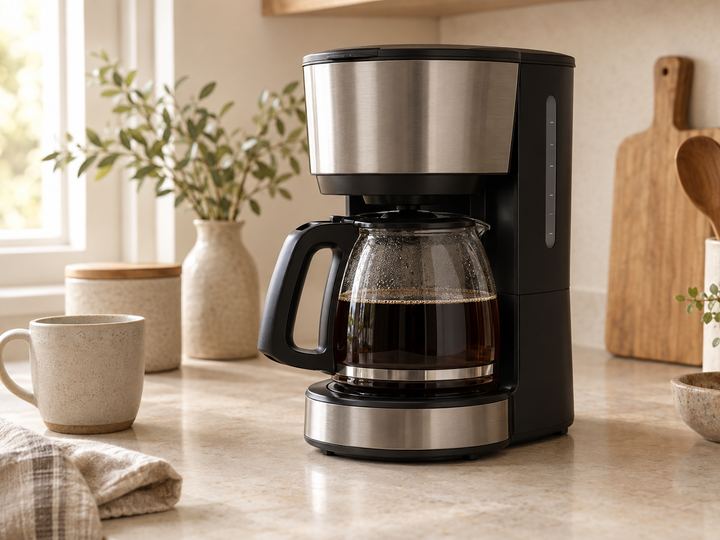
Stainless steel is durable, easy to clean and less breakable than glass. But the phrase stainless-steel coffee maker describes only part of a product. A steel outer shell can hide a plastic filter, a silicone seal or a polymer handle.
The smart way to shop is to choose the type of brewer first, then inspect every part that touches hot water and finished coffee.
1. Stainless-steel pour-over dripper
A stainless-steel dripper such as the Kalita Wave is a compact way to keep the brewer itself mostly metal. It uses paper filters, needs no electricity and can brew straight into your mug or server. It is a good fit if you prefer a clean, filtered cup and do not mind a little practice.
The dripper is only part of the setup; your kettle and cup materials still matter. Explore stainless-steel pour-over drippers.
2. Stainless-steel French press
For a bigger body and fuller flavor, a steel French press is a strong candidate. Double-wall presses can keep coffee warmer, while metal mesh allows more oils and fine particles into the cup than paper filters do.
Look at the lid underside and filter support, not just the pot. Brands and product versions differ. A sturdy stainless-steel model can be a long-term purchase, but only call it fully plastic-free after verifying all contact parts. Compare insulated stainless-steel French presses.
3. Stovetop stainless-steel moka pot
A moka pot heats water in a lower chamber, pushing it through ground coffee into an upper chamber. It makes strong coffee, though not café-style espresso at typical espresso-machine pressure. The Bialetti Venus is a recognizable stainless-steel option.
A gasket is necessary for sealing, and buyers should confirm the material of that and other components. If a metal-bodied stovetop brewer is your priority, take a closer look at the Bialetti Venus.
4. Stainless-steel AeroPress
The AeroPress Steel is a more recent option for single servings. Its maker describes the main components as 304 stainless steel, with a silicone seal. That makes it interesting for shoppers minimizing conventional plastic, but it is not entirely free of nonmetal contact parts. See the AeroPress Steel.
Which is best for you?
Choose pour-over for a clean cup and a lightweight setup; French press for rich texture and batch brewing; moka pot for strong stovetop coffee; or steel immersion press for quick individual cups.
Remember that “food-grade,” “BPA-free” and “stainless exterior” are three different claims. None proves the whole water path is metal. The best purchase is one with clear component documentation and replaceable parts, not simply an attractive finish.
Bottom line: If you want less plastic touching hot coffee, steel is a useful starting point. If you demand no plastic at all, examine the entire assembly and expect that seals may complicate the answer.