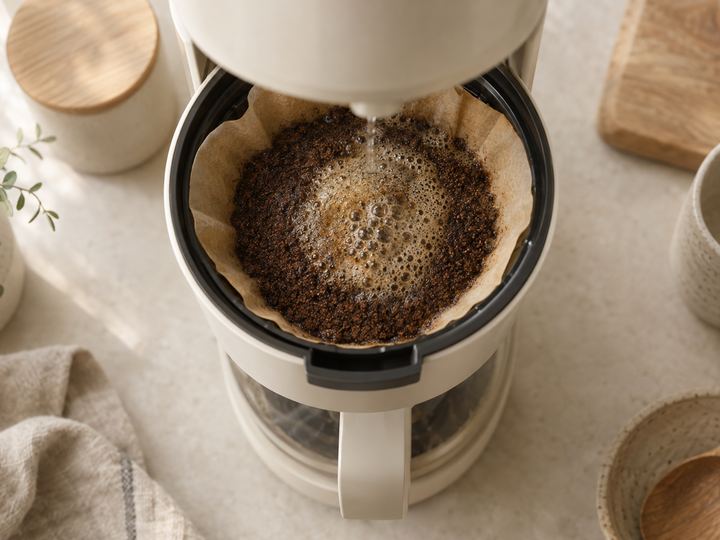
If you are shopping for a coffee maker without plastic touching hot water, look beyond the housing. What matters is the hot-water path: every surface water touches between the kettle and your cup.
Many automatic machines have an opaque reservoir or hidden internal tubing. A glass or ceramic manual brewer is much easier to inspect. This does not automatically establish that one device is healthier than another; it simply gives you more control over the contact materials.
What counts as the hot-water path?
Start at the point where water is heated. In an automatic machine, that may include a tank, pump, tubing, heater connection, showerhead, brew basket and carafe lid. In a manual pour-over, it may be as simple as a kettle spout, a paper filter, a ceramic dripper and a glass cup.
A manufacturer’s “BPA-free” statement is not the same thing as “no plastic.” Silicone is also different from conventional plastic but is still a material some strict shoppers want to investigate.
Choice 1: A Chemex with paper filters
The Chemex has a one-piece borosilicate-glass brewing vessel. Its filter sits directly in the glass cone, allowing you to see the brewing surfaces. For people who want multiple cups without a plastic basket, it is one of the most straightforward options. View the Chemex glass coffee maker.
Its main disadvantages are the need for a separate kettle, a slower process and the risk of broken glass.
Choice 2: A ceramic pour-over dripper
A ceramic Hario V60 or porcelain Melitta-style dripper can sit directly over a ceramic mug or glass server. With paper filters and a suitable kettle, the route from hot water to coffee can be kept simple and visible.
The V60 rewards careful pouring; a more forgiving wedge-style dripper may be easier for beginners. Compare ceramic pour-over coffee makers if ease of use matters as much as materials.
Choice 3: A stainless-steel French press
Look for a press with a metal vessel, metal lid underside and metal filter assembly, then verify seals and any hidden support pieces. Stainless-steel bodies are common, but the composition of the plunger can vary. The benefit is an immersion brewer that makes rich coffee without single-use paper filters. Browse stainless-steel French presses.
Choice 4: A stainless-steel stovetop brewer
Stovetop moka pots can be a practical alternative to an electric coffee maker. Stainless-steel models such as the Bialetti Venus are worth considering, but their gaskets and other components must be checked. A moka pot can reduce reliance on plastic brewer bodies without being literally made of metal alone. See stainless-steel moka pot choices.
Checklist before you order
Ask the manufacturer about the reservoir, tubing, heating chamber, showerhead, filter holder, seals and lid. If the brand cannot identify what hot water touches, treat the composition as unknown rather than assuming plastic-free construction.
For a simple setup, choose a ceramic dripper, paper filters, a kettle with a verified interior, and a glass or ceramic mug. You can build an excellent morning routine without paying for automation you do not need.
Bottom line: A manual glass or ceramic pour-over usually offers the easiest-to-audit hot-water path. The right choice depends on your willingness to trade convenience for material transparency.